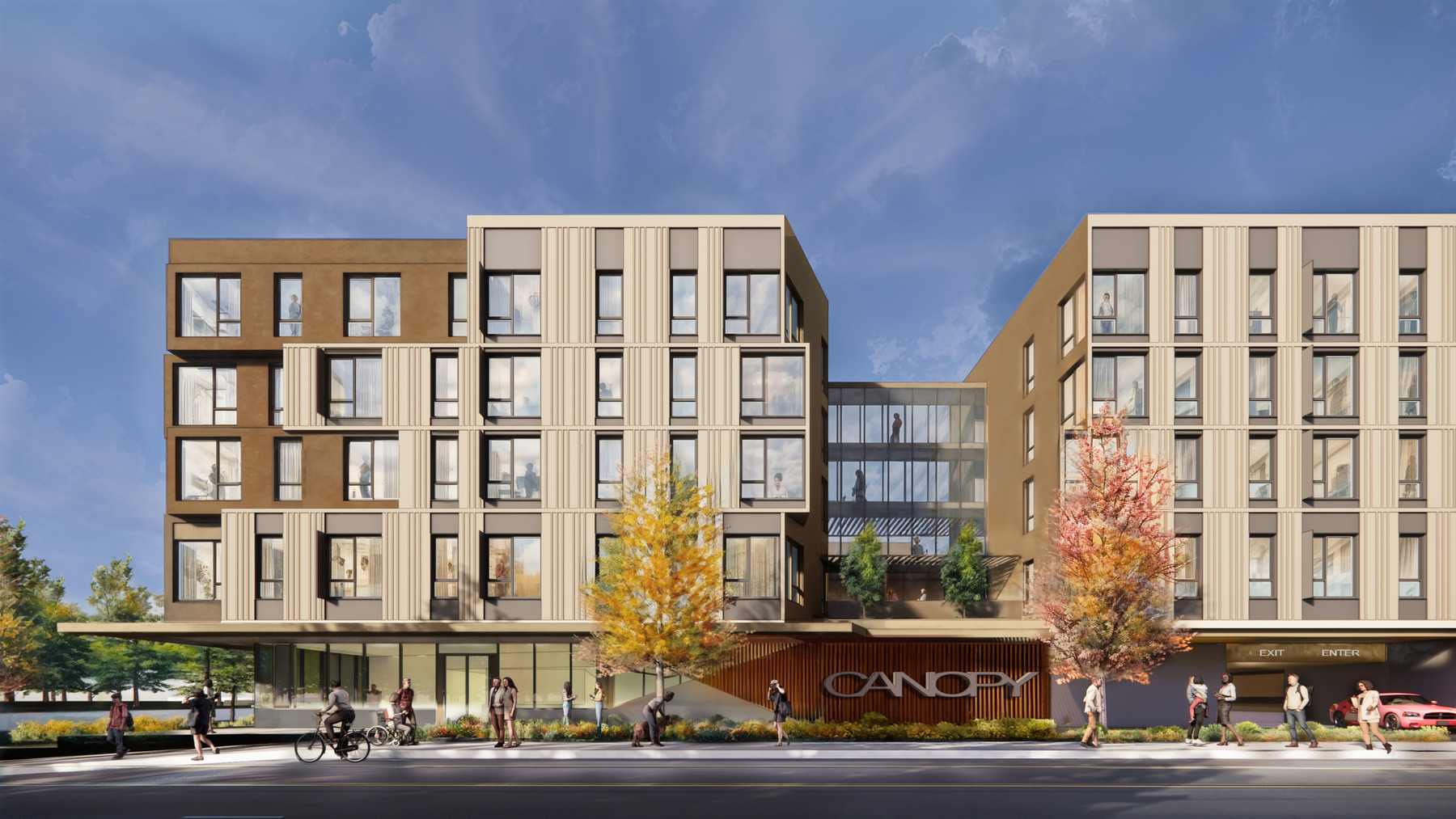
Canopy Affordable Housing San Ramon, California
As an integral component of mixed-use Bishop Ranch Development in San Ramon, California, Canopy introduces more than 160 affordable residential units into a rapidly evolving community.
Location
San Ramon, California
Sector
Residential
Service
Architecture
Client
Eden Housing
Status
Entitled
Size
226,000 SF; 161 Units
The larger Bishop Ranch vision seeks to transform a traditional office park into a vibrant, walkable neighborhood that seamlessly integrates living, working, recreation, retail, and sustainable design. Canopy plays a critical role in realizing this vision by providing much-needed affordable housing in alignment with the City of San Ramon’s updated Inclusionary Housing Ordinance.
The project offers a diverse mix of one-, two-, and three-bedroom units to accommodate a wide range of household types and income levels. Its massing strategy is carefully calibrated to respect the surrounding context, breaking down the building scale to transition gracefully into the adjacent townhome neighborhood and in turn, anchoring and serving as a gateway to the larger community The residential community is organized around a permeable, elevated central courtyard that opens toward the surrounding street network, reinforcing connectivity and fostering a sense of openness within the site.
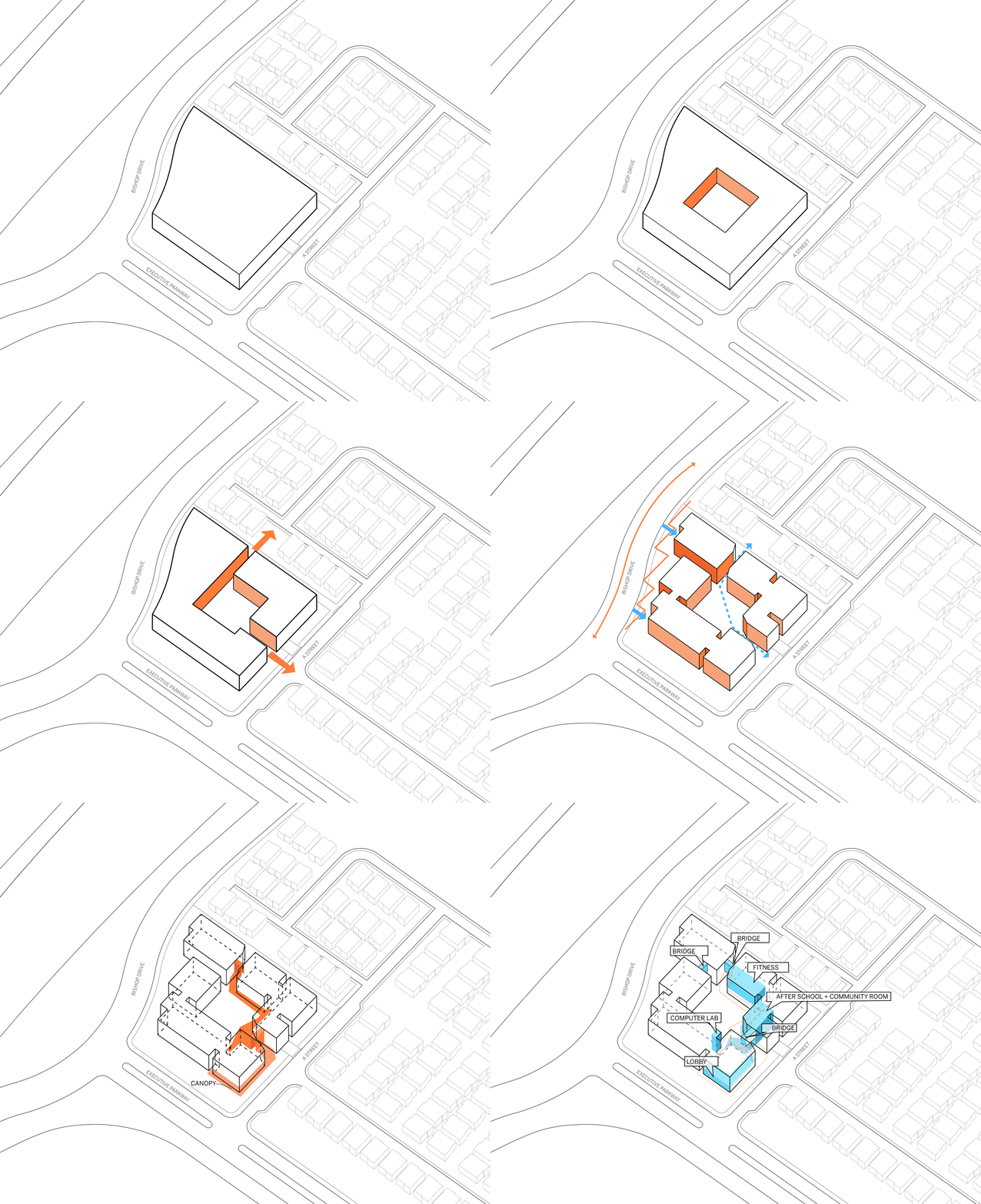
At the heart of Canopy is a robust suite of resident amenities designed to support community life and daily needs. These include a community room, after-school space, computer lab, and fitness room, each of which opens directly onto a lushly landscaped courtyard. This seamless indoor-outdoor relationship expands the functionality of shared spaces while encouraging social interaction, wellness, and engagement with nature.
Sustainability is integral to the project’s design approach. Canopy incorporates drought-tolerant landscaping, and shared open spaces, while connecting residents to an extensive network of walkable streets and greenways throughout Bishop Ranch. Together, these strategies reduce environmental impact, promote healthier lifestyles, and contribute to the long-term resilience of the community.
