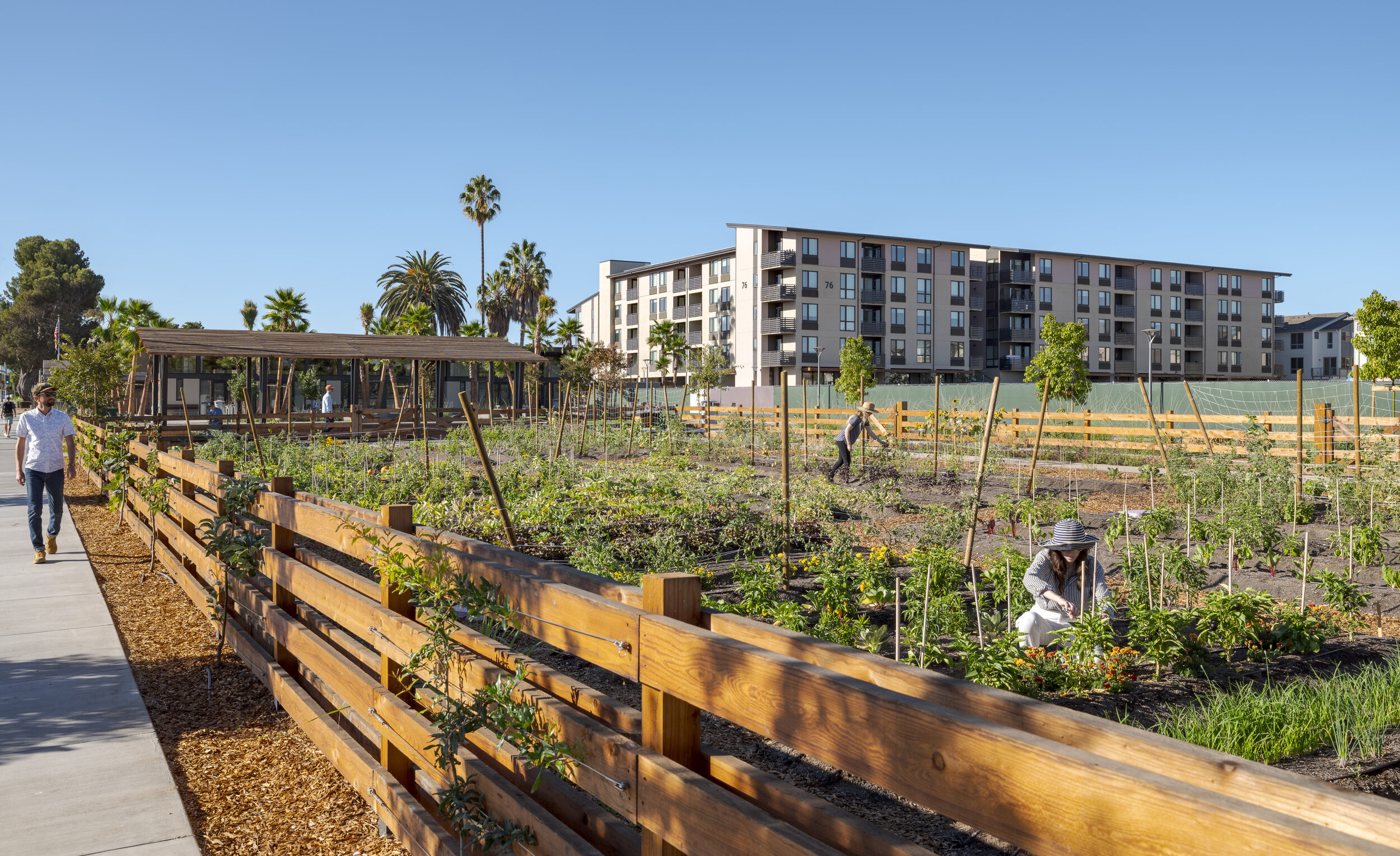
Steinberg Hart’s Santa Clara Agrihood and Fox Point Farms were featured in The Grist, whose publication focuses on finding solutions at the intersection of climate and justice. Excerpts of the article by Matt Simon below:
“Picture the bucolic little town of a fairy tale. At its core stand medieval buildings, a square where folks hawk their goods, and perhaps a well to provide water. Beyond the defensive wall radiate agricultural fields, where people toil to bring grains, fruits, and vegetables to market.
Invert that for modern times and you’ve got the idea behind “agrihoods,” communities designed around a central farm. Like a garden in a big city, agrihoods promise to boost food security, reduce temperatures, capture rainwater, and increase biodiversity. As climate change intensifies heat, flooding, and pressure on food systems, agrihoods could be a way to make urban living more resilient — not just more picturesque.
“Developers have a hard time offering open space, because they would like to build more housing,” said Vincent Mudd, a partner at the architectural firm Steinberg Hart, which designs agrihoods. “One of the few ways to kind of bridge that gap is to be able to use active open space that actually generates commerce.”
On paper, an agrihood is a simple concept: a working farm surrounded by single- or multifamily housing. Steinberg Hart recently finished two of them in California — one in Santa Clara and another, called Fox Point Farms, in Encinitas. The former, south of San Francisco, features townhouses, market-rate units, and affordable housing, plus a community center and retail shops. The latter, north of San Diego, adds a farm-to-table restaurant, an event venue, and a grocery store, but its housing is primarily for sale instead of rent. “Two different housing programs for two different communities, but built around the sustainability of urban farming,” Mudd said.
While these projects are in relatively affluent areas, Mudd said agrihoods can be built nearly anywhere — though it might require tweaks to zoning rules. “Almost every city has the ability to make that zoning change,” Mudd said, “because it retains commerce, preserves jobs, generates sales tax income from retail, and provides mixed-income, attainable housing.””
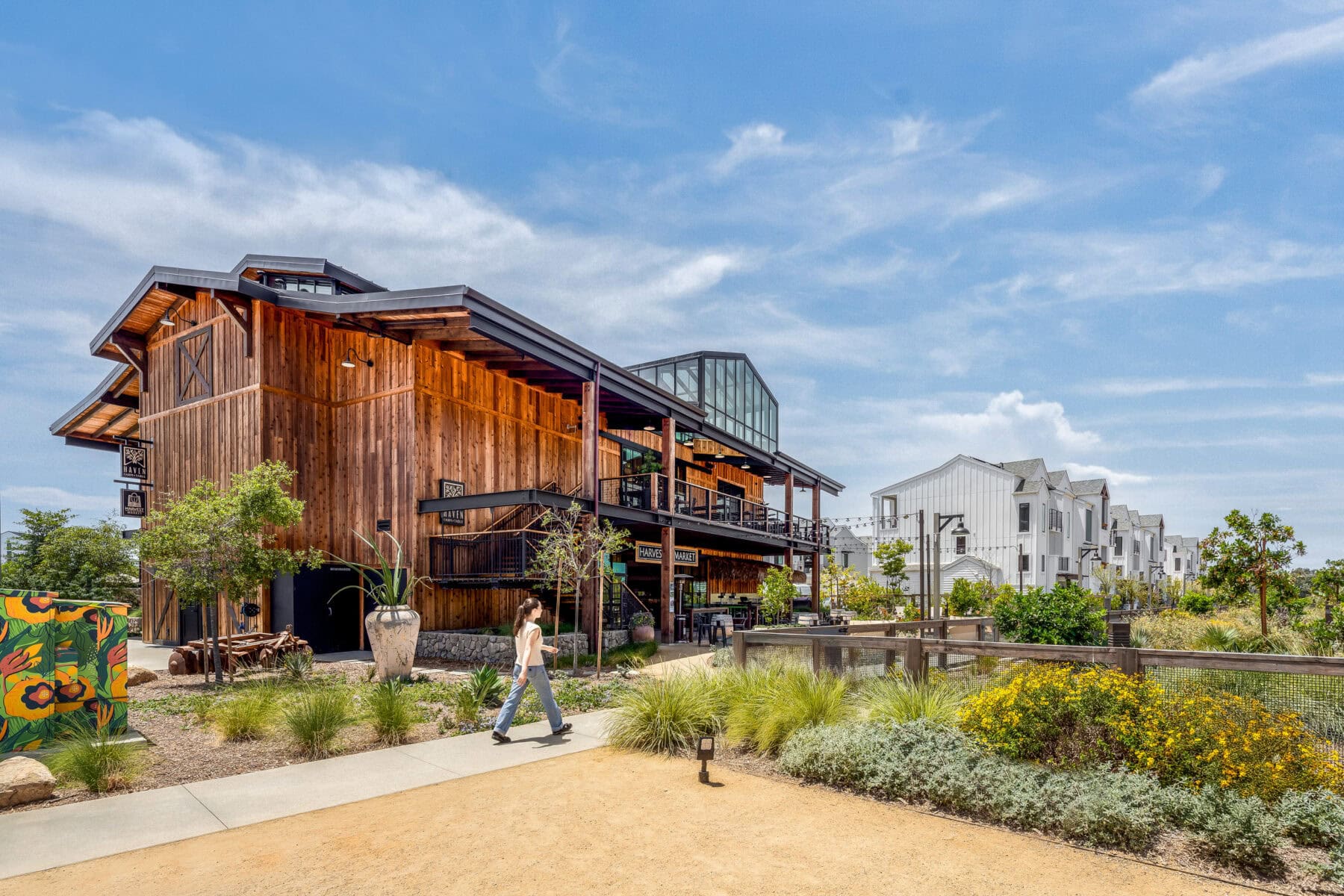
Fox Point Farms Agrihood in Encinitas, CA
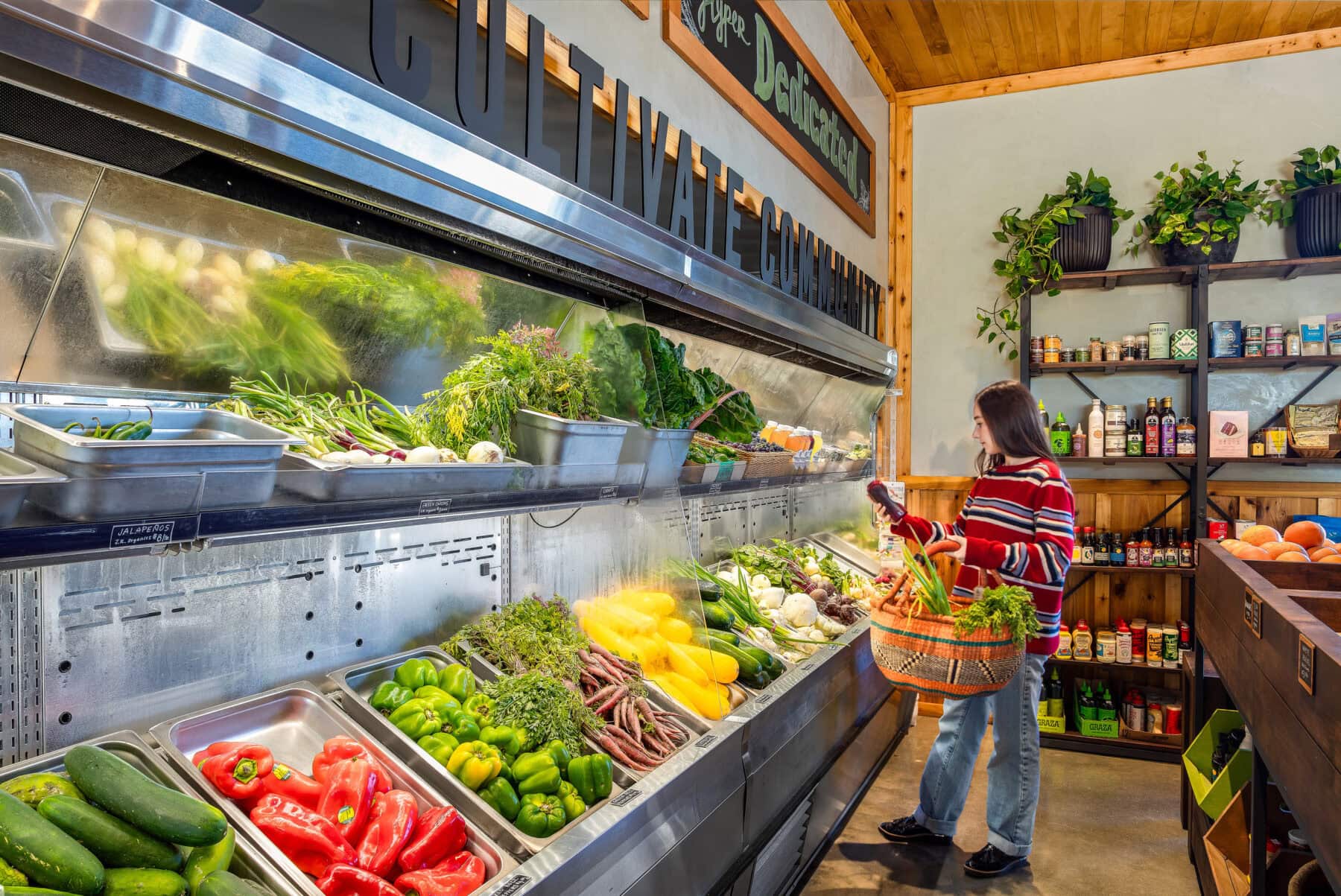
“While an agrihood can’t feasibly provide all the calories residents need, it’s an especially powerful system because the produce that it does produce is highly nutritious. Scale that food production up across a city, and the impact could be huge: One study found that Los Angeles could meet a third of its need for vegetables by converting vacant lots into gardens. “It’s incredible what we could do with what we have, and what we could do even more with intentional planning,” said Catherine Brinkley, a social scientist who studies urban agriculture at the University of California, Davis.
In Encinitas, Greg Reese, the farm manager at Fox Point Farms, is sending food to the agrihood’s grocery store, so in addition to size he also considers the value of his crops. A lot of that comes down to speed: Arugula grows faster than cantaloupe, meaning Reese can harvest it, send it to market, and grow some more in quick succession. (Given the pleasant climate of Southern California, the farm can grow food for 11, maybe even 12 months of the year.) It can also produce foods that the chefs at the on-site restaurant want. “What is in high demand, and then what grows really fast as well?” Reese said. “I can plant a seed and they can harvest it in a month, or transplant it within two months, so it’s a higher turnover.”
These crops can even benefit from a quirk of city life: the urban heat island effect. As the sun beats down on all that concrete, asphalt, and brick, the landscape absorbs its thermal energy — raising the mercury well above surrounding rural areas — and slowly releases it at night. This is a growing problem for urbanites struggling with ever-higher temperatures. On the flip side, these green spaces help cool the neighborhood because their plants release water vapor, making summer more comfortable for the surrounding community.
An agrihood can also support local biodiversity. Planting native flowering species, for instance, simultaneously beautifies the landscape and attracts pollinating insects, hummingbirds, and bats (which eat mosquitoes, an added bonus). Even the flowers the crops produce provide food for these pollinators, which return the favor by helping the plants reproduce.
With the crop varieties decided, an agrihood can figure out how much refrigeration and storage capacity to build out. Those who live there will also have to decide whether to sell produce from a stand or use it in an on-site restaurant. And they’ll need to project the costs of hiring outside help to keep the farm going.
It’s not so simple, then, as just erecting a few buildings around a green space and calling it a day. “All those things need to be figured out before you start putting things on paper and making commitments,” Hermanson said. “Successful farms are well-funded, well-staffed. Everyone does better with clear expectations, clear budgets, and then also the community knows what it is they’re getting.””